Mastering data structures is the key to unlocking efficient programming and building robust software applications. Data structures are the fundamental building blocks of any program, allowing developers to store, organize, and manipulate data in a way that maximizes efficiency and performance.
In this article, we dive deep into the world of data structures, exploring various types such as arrays, linked lists, stacks, queues, trees, and graphs. We’ll explain the concepts behind each data structure, demonstrate their implementation, and discuss their strengths and weaknesses in different scenarios.
By understanding and mastering data structures, programmers gain the ability to optimize their code, minimize memory usage, and improve overall runtime efficiency. Whether you’re a beginner seeking a solid foundation or an experienced developer looking to enhance your skills, this article will provide you with the knowledge and tools to confidently tackle complex programming challenges.
Join us as we demystify the world of data structures and embark on a journey to become a master of efficient programming. Get ready to unlock the full potential of your code!
Importance of data structures in programming
Data structures are crucial in programming because they provide a systematic way to store and access data. When we write code, we work with different types of data, such as numbers, strings, and objects. Without data structures, managing and manipulating this data would be a chaotic and inefficient process.
One of the main reasons data structures are important is because they enable us to organize data in a way that allows for efficient searching, insertion, deletion, and retrieval operations. For example, an array allows for constant time access to elements, while a linked list facilitates efficient insertions and deletions. By choosing the appropriate data structure for a specific task, we can significantly improve the performance of our programs.
Another key aspect of data structures is their ability to optimize memory usage. Different data structures have different memory requirements, and choosing the right one can help conserve valuable resources. For example, using a linked list instead of an array can save memory when dealing with a large amount of dynamically changing data.
In addition to efficiency and memory optimization, data structures also enable us to solve complex problems and implement advanced algorithms. Many algorithms rely on specific data structures to function properly. For instance, graph algorithms often require the use of graph data structures to represent relationships between entities.
Data structures are the foundation upon which efficient programming is built. By understanding their importance and mastering their implementation, developers can write code that is not only performant and memory-efficient but also capable of solving complex problems.
Common types of data structures
Data structures come in various types, each with its own characteristics and use cases. Let’s explore some of the most common ones:
Arrays and linked lists
Arrays and linked lists are two of the most basic data structures. An array is a collection of elements stored in
contiguous memory locations, allowing for constant time access to any element. On the other hand, a linked list consists of nodes, each containing a value and a reference to the next node. Linked lists excel at insertions and deletions, but accessing arbitrary elements takes linear time.
Arrays are ideal when we need quick access to elements and know their indices in advance. However, their size is fixed, and inserting or deleting elements can be costly. Linked lists, on the other hand, are suitable when we frequently need to insert or delete elements, but access to arbitrary elements is slower.
Stacks and queues
Stacks and queues are abstract data types that allow for specific operations. A stack follows the LIFO (Last-In, First-Out) principle, meaning the last element added is the first one to be removed. Stacks are useful for tasks like parsing expressions and implementing backtracking algorithms.
Queues, on the other hand, follow the FIFO (First-In, First-Out) principle. The element that has been in the queue the longest is the first to be removed. Queues are commonly used in scenarios like task scheduling and breadth-first search algorithms.
Both stacks and queues can be implemented using arrays or linked lists, depending on the requirements of the specific use case.
Trees and graphs
Trees and graphs are non-linear data structures that represent hierarchical relationships between elements. A tree consists of nodes connected by edges, with a single root node at the top. Trees are used for tasks like representing hierarchical data (e.g., file systems) and implementing search algorithms like binary search.
Graphs, on the other hand, are more general and can represent any set of interconnected nodes. Graphs are used in a wide range of applications, such as social networks, route planning, and recommendation systems. They can be directed (edges have a specific direction) or undirected (edges have no specific direction).
Hash tables and hash functions
Hash tables are data structures that use hash functions to map keys to values. They provide constant time average-case performance for insertion, deletion, and retrieval operations. The underlying concept behind hash tables is to store data in an array-like structure, using the hash function to convert keys into array indices.
A hash function takes an input (e.g., a string) and produces a fixed-size output (e.g., an integer). The output is used as an index to store or retrieve data in the hash table. The quality of a hash function is crucial to ensure even distribution of keys and minimize collisions (when two keys are mapped to the same index).
Hash tables are widely used in applications that require fast key-value lookups, such as dictionaries and caches.
Understanding time and space complexity in data structures
When analyzing the performance of data structures, it is important to understand time and space complexity. Time complexity refers to how the runtime of an algorithm or operation grows as the input size increases. Space complexity, on the other hand, measures how the memory usage grows.
Different data structures have different time and space complexities for various operations. For example, array-based data structures like arrays and hash tables have constant time (O(1)) access, while linked lists have linear time (O(n)) access. Similarly, the space complexity of an array is linear (O(n)), while a linked list has constant space complexity (O(1)).
By understanding the time and space complexities of different data structures, developers can make informed decisions about which one to use for a specific task. It allows them to optimize their code and choose the most
efficient data structure that meets the requirements of their application.
Best practices for implementing data structures
Implementing data structures efficiently requires following some best practices. Here are a few tips to keep in mind:
1. Understand the requirements: Before choosing a data structure, thoroughly analyze the requirements of your application. Consider the operations you need to perform frequently and the constraints you have (e.g., memory usage, time limits).
2. Choose the appropriate data structure: Based on the requirements, select the data structure that best matches your needs. Consider the time and space complexity of different operations and the trade-offs involved.
3. Consider the language-specific implementations: Many programming languages provide built-in implementations of common data structures. These implementations are often optimized for performance and memory usage, so it’s worth exploring them before reinventing the wheel.
4. Test and benchmark: Once you’ve implemented a data structure, thoroughly test it with various inputs and edge cases. Benchmark the performance to ensure it meets your expectations. This will help you identify any potential issues or bottlenecks.
5. Document your code: Proper documentation is essential when working with data structures. Clearly explain the purpose, usage, and any specific considerations of your implementation. This will make it easier for others (including your future self) to understand and use your code.
Conclusion and next steps in mastering data structures
In conclusion, mastering data structures is crucial for efficient programming and building robust software applications. Data structures allow developers to store, organize, and manipulate data in a way that maximizes efficiency and performance. By understanding the various types of data structures and their characteristics, programmers can choose the most appropriate one for a given task.
In this article, we explored common data structures such as arrays, linked lists, stacks, queues, trees, graphs, and hash tables. We discussed the importance of data structures in programming, their strengths and weaknesses, and best practices for implementing them.
To truly master data structures, it’s important to practice implementing them in different programming languages, solve algorithmic problems that require their usage, and explore more advanced data structures like heaps and tries. Continuously improving your understanding and implementation of data structures will unlock the full potential of your code and make you a more efficient programmer.
So, let’s dive deeper into the world of data structures and embark on a journey to become masters of efficient programming. Unlock the key to building robust and performant software applications by mastering data structures.
Comments (0)

Categories
Recent posts

Simulink Solvers: Fixed vs. Variable ...
28 Nov 2024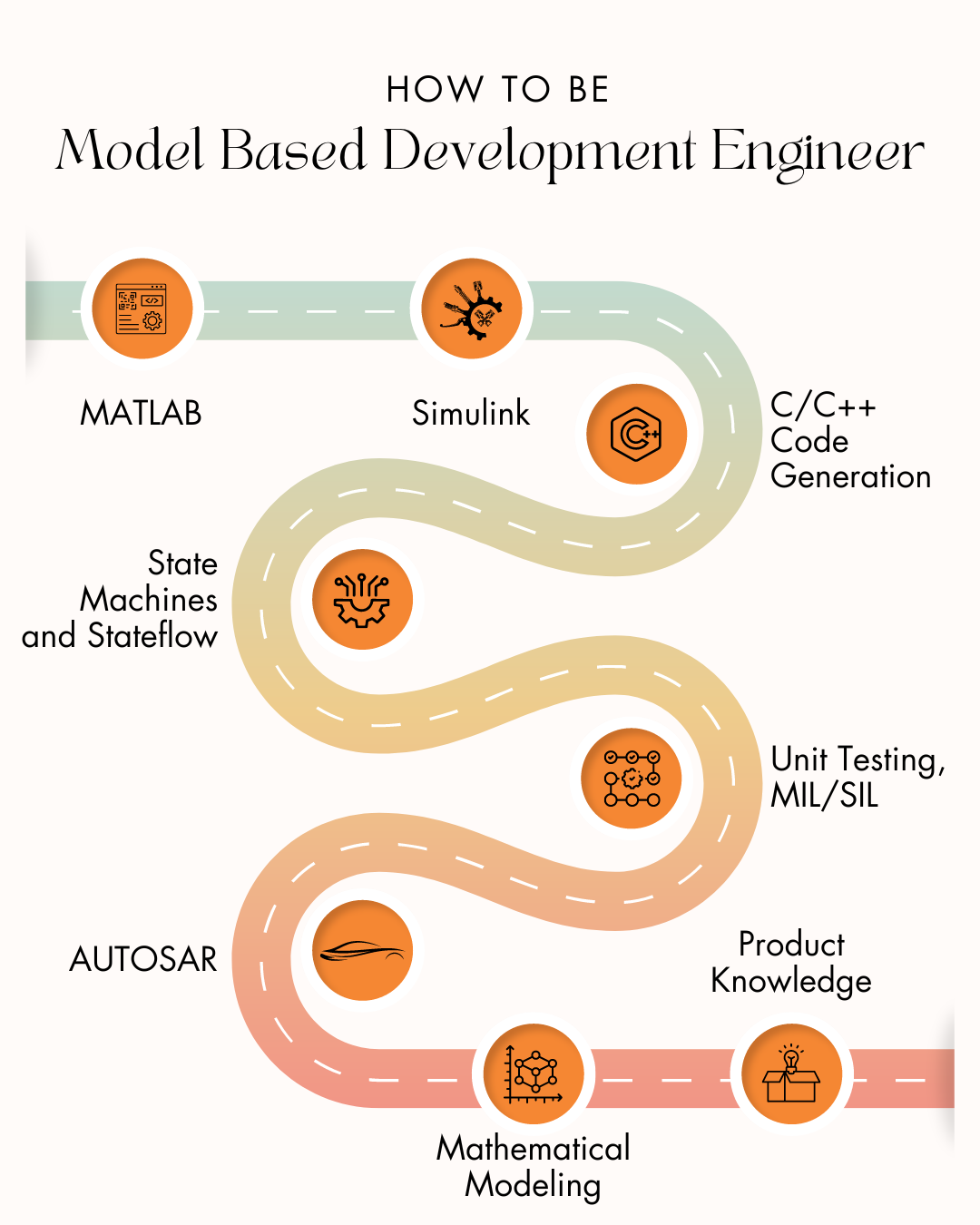
HOW to be a Model-Based Design Engineer
31 Aug 2024
How to Be a Model-Based Design Engineer: ...
7 Sep 2024